15 October 2026 · 4 min read
Hand-tufted, handwoven and dhurrie rugs: what is the difference?
How hand-tufted rugs, handwoven rugs and flat-woven dhurries are made, how they feel underfoot, and which suits your home.

Shop for handmade rugs in India and you will see the words hand-tufted, handwoven and dhurrie again and again. Each describes a different way of making a rug, and each has its own feel, look and place in the home.
Hand-tufted rugs
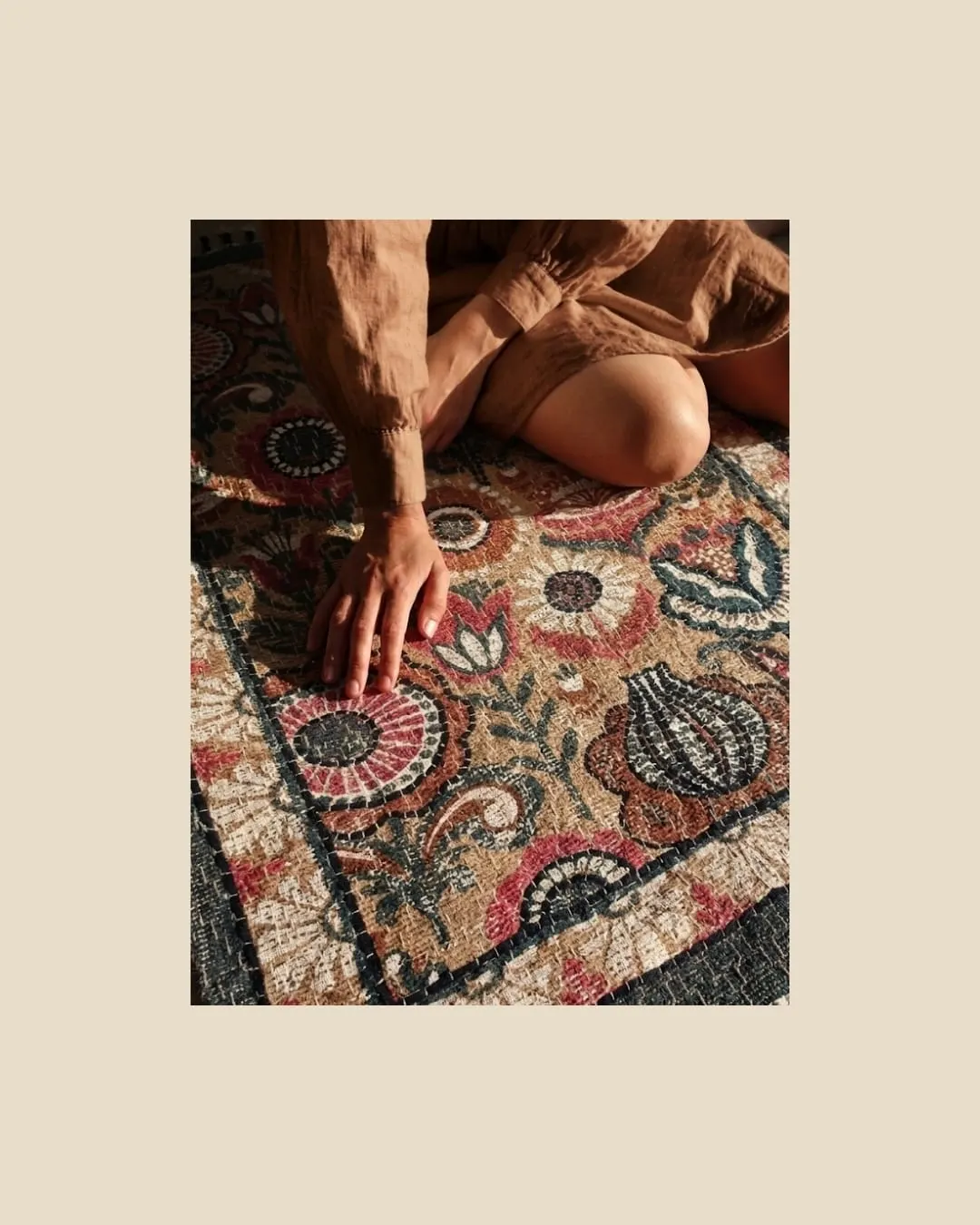
A hand-tufted rug is made by pushing yarn through a stretched cloth backing with a hand-held tufting tool, following a design drawn on the cloth. The loops can be left as they are or cut to make a soft pile, and the back is then sealed and covered with a second cloth.
- Soft, plush pile with rich colour.
- Ideal for bold graphics and shaped rugs, such as animals, flowers and curved outlines, because the design can follow any line.
- Lovely in bedrooms, living rooms and children's rooms.
Handwoven rugs
A handwoven rug is made on a loom, with the weaver interlacing yarn across the vertical threads, row by row. Because the pattern is built into the weave itself, handwoven rugs are strong and long-lasting, and flat-woven styles are often reversible.
Dhurries
A dhurrie is a traditional Indian flat-woven rug, with no pile. Dhurries are light, easy to move and easy to shake out, which makes them a favourite for kitchens, hallways, verandas and warm climates.
Which should you choose?
- For softness underfoot and a statement design: a hand-tufted rug.
- For everyday wear and a classic, flat finish: a handwoven rug or a dhurrie.
- For busy spaces and easy cleaning: a dhurrie.
Not sure which suits your room? Ask our team. The consultation is free.
From the collection
Pieces from this story
Woven Earth
Medallion Handwoven Rug
₹7,200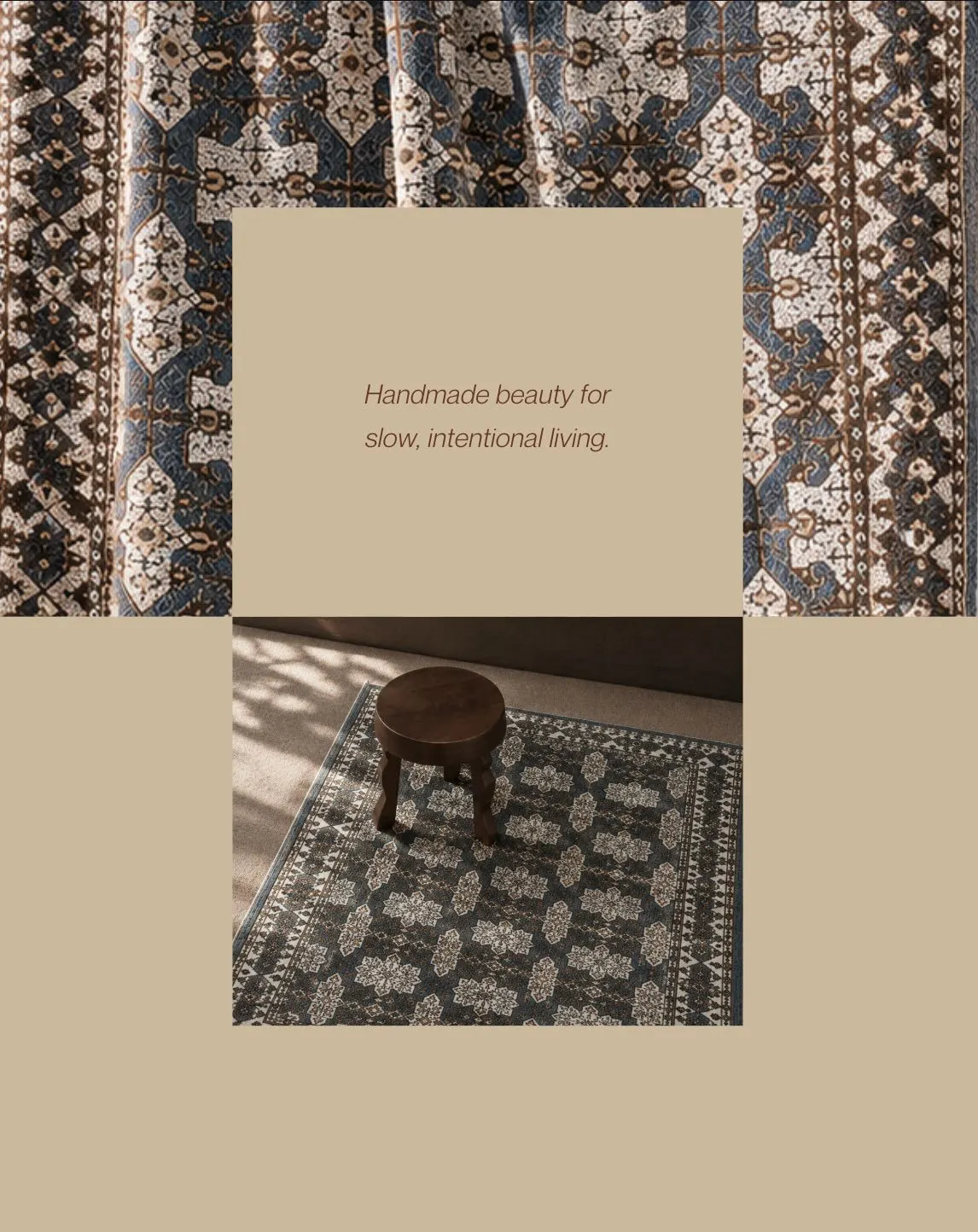
Woven Earth
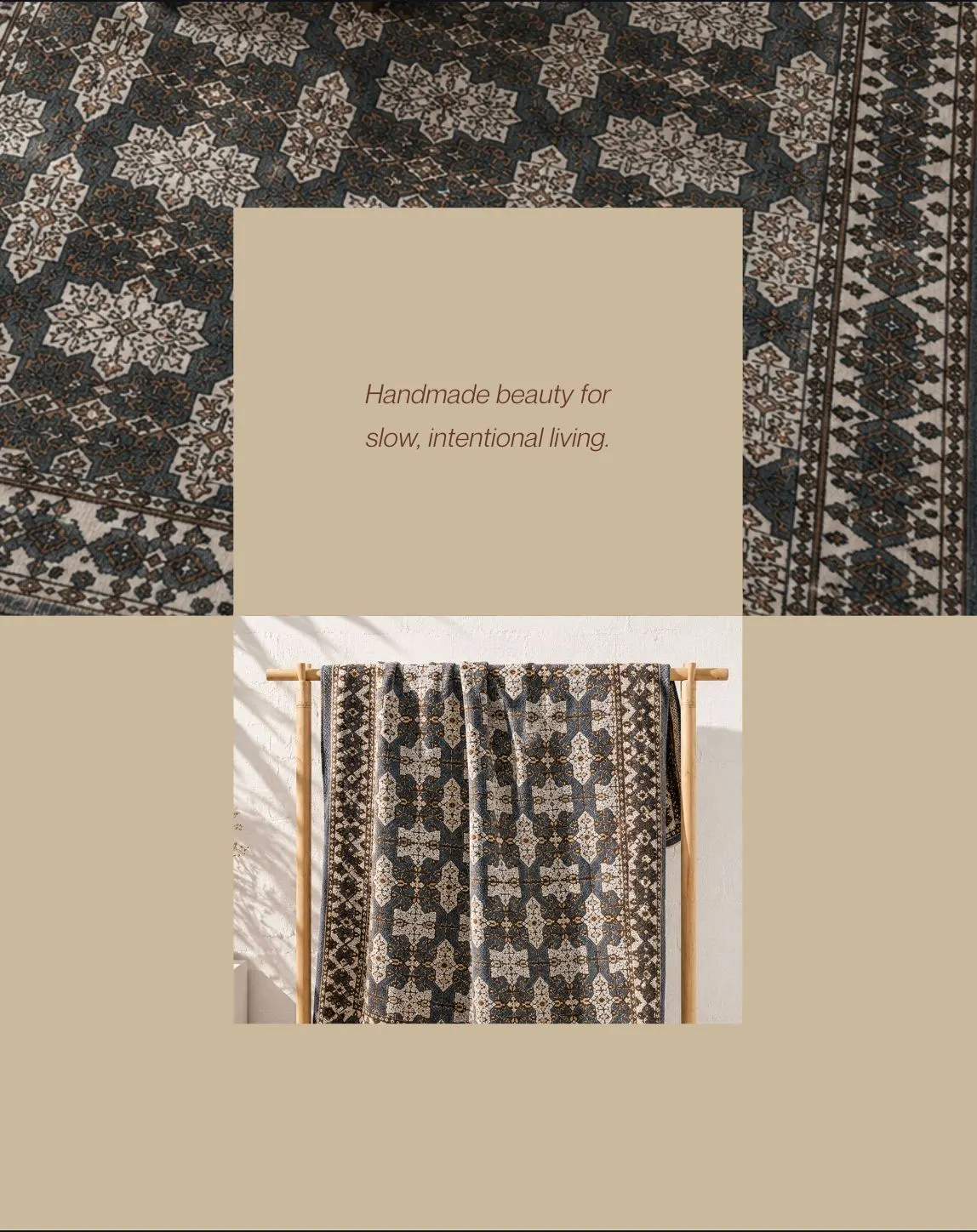
Monochrome Dhurrie
₹6,800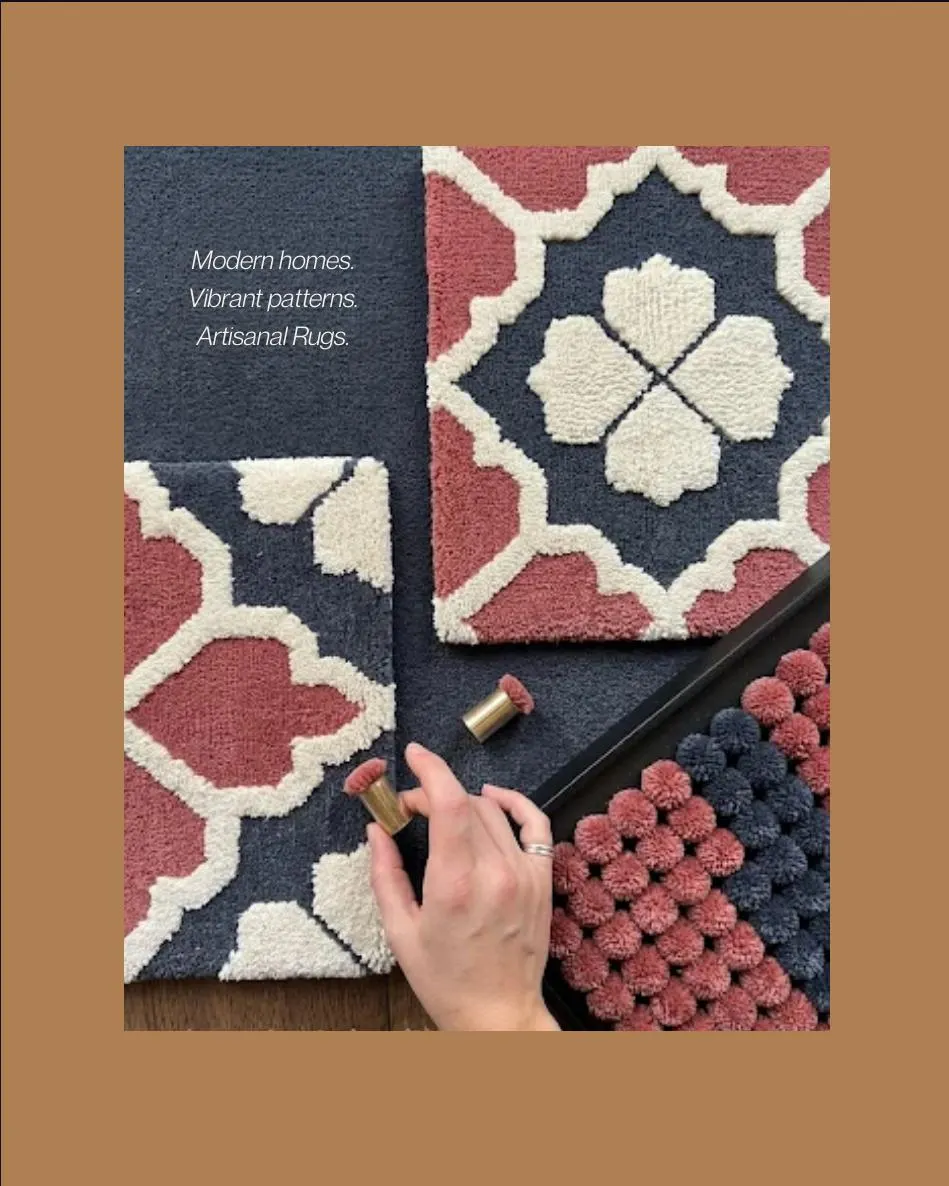
Woven Earth
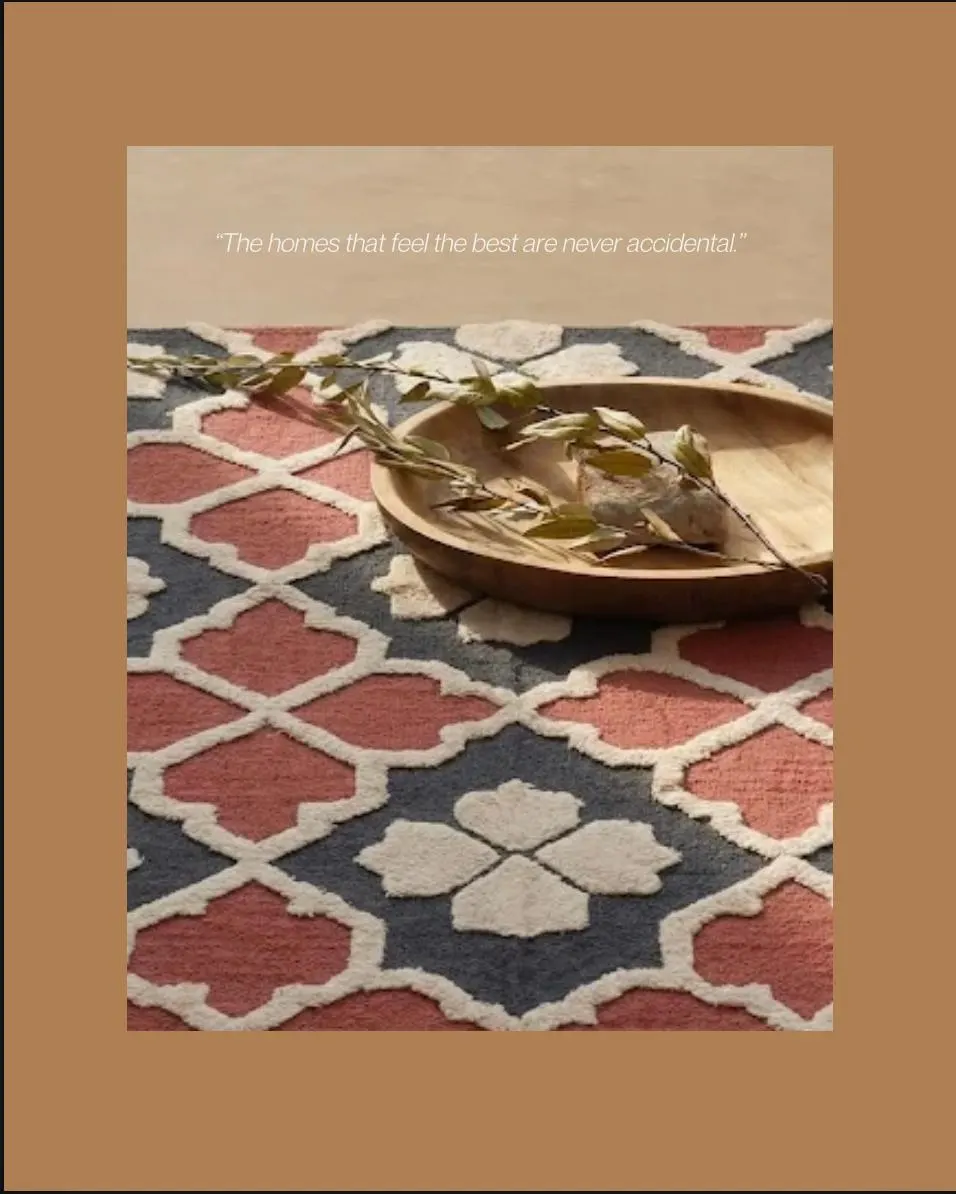
Tufted Lattice Rug
₹8,000


